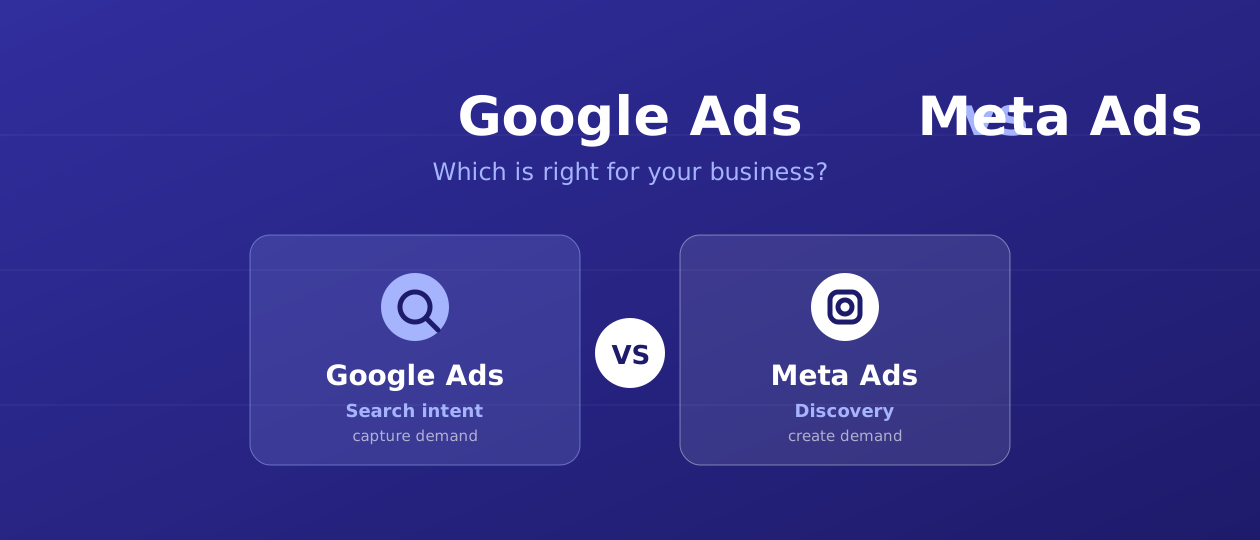
It's one of the most common questions business owners ask before spending on paid advertising: Google Ads or Meta Ads? The honest answer is that they aren't really competitors — they solve different problems. Understanding the difference is the key to not wasting your budget. Here's a simple breakdown.
The core difference: intent vs. discovery
This single idea explains almost everything:
- Google Ads = intent. You reach people who are actively searching for what you sell. They already want it — you just need to show up. This is "pull" marketing.
- Meta Ads (Instagram & Facebook) = discovery. You reach people based on their interests, behaviour, and demographics while they scroll. They weren't looking for you — you create the demand. This is "push" marketing.
"The best marketing doesn't feel like marketing." Google Ads meets demand that already exists; Meta Ads creates the demand in the first place.— A useful way to remember the difference
When to choose Google Ads
- People are already searching for your product or service (e.g. "emergency plumber Mumbai", "Invisalign near me").
- You sell something with clear, high purchase intent.
- You want leads or sales now from ready-to-buy customers.
- Your service solves an urgent or specific need.
When to choose Meta Ads
- Your product is visual or benefits from storytelling (fashion, food, lifestyle, D2C).
- People don't know they need you yet — you have to build awareness.
- You want to reach a specific audience by interest, age, location, or behaviour.
- You're building a brand and a community, not just chasing the next click.
Why most businesses should use both
The smartest paid strategy usually combines the two. Meta Ads build awareness and interest; Google Ads capture that demand when those same people later search for you. Add retargeting — showing ads to people who visited your site but didn't convert — and you close the loop. Retargeting is consistently one of the highest-ROI tactics in paid advertising.
Key takeaway: Meta Ads create demand, Google Ads capture it, and retargeting closes the loop. Used together, each channel makes the others more effective.
How to split your budget
There's no universal ratio — it depends on your industry, margins, and goals. A common starting point is to test a modest budget on the platform that best matches your customer's behaviour, gather data, then scale what proves profitable. The metric that matters isn't cost per click — it's cost per result and return on ad spend (ROAS). Without proper conversion tracking, you're flying blind on both platforms.
Don't optimise for clicks. A cheap click that never converts costs you more than an expensive one that does. Always measure cost per result, not cost per click.
Get it right from the start
Both platforms reward strategy and punish guesswork. As a Google & Meta Ads agency in Mumbai, Adveerra builds and manages campaigns engineered around return on ad spend — precise targeting, high-converting creative, A/B testing, and conversion tracking so you always know what every rupee is bringing back. Paid ads also work best alongside strong SEO and social media, which is why we approach growth full-funnel.
Wasting budget on ads that don't convert?
Get a free ad account review — we'll show you where budget is leaking and the fastest path to better returns.
Get My Free Review →